What is cloud computing?

Cloud technology has completely changed the way businesses and everyday people handle data, apps, and computing power. Instead of buying and managing their own servers, more and more organizations are using remote data centers they can access over the internet. It’s a smarter, more flexible way to work — and it can save a lot of money on IT costs.
Understanding cloud computing
In simple terms, cloud computing means getting computing services over the internet. Instead of running everything on your own devices or office servers, you can access apps, data, and processing power remotely. A cloud provider takes care of all the behind-the-scenes stuff — servers, storage, databases, networking, software, you name it.
This works great for big companies and individual users alike. You can scale up or down as needed, avoid big upfront hardware costs, and keep things running efficiently. The bottom line? Cloud computing is all about flexibility, scalability, and making digital services easier to manage.
Core cloud service models
Cloud solutions typically come in three flavors, each offering a different level of control between you and your provider:
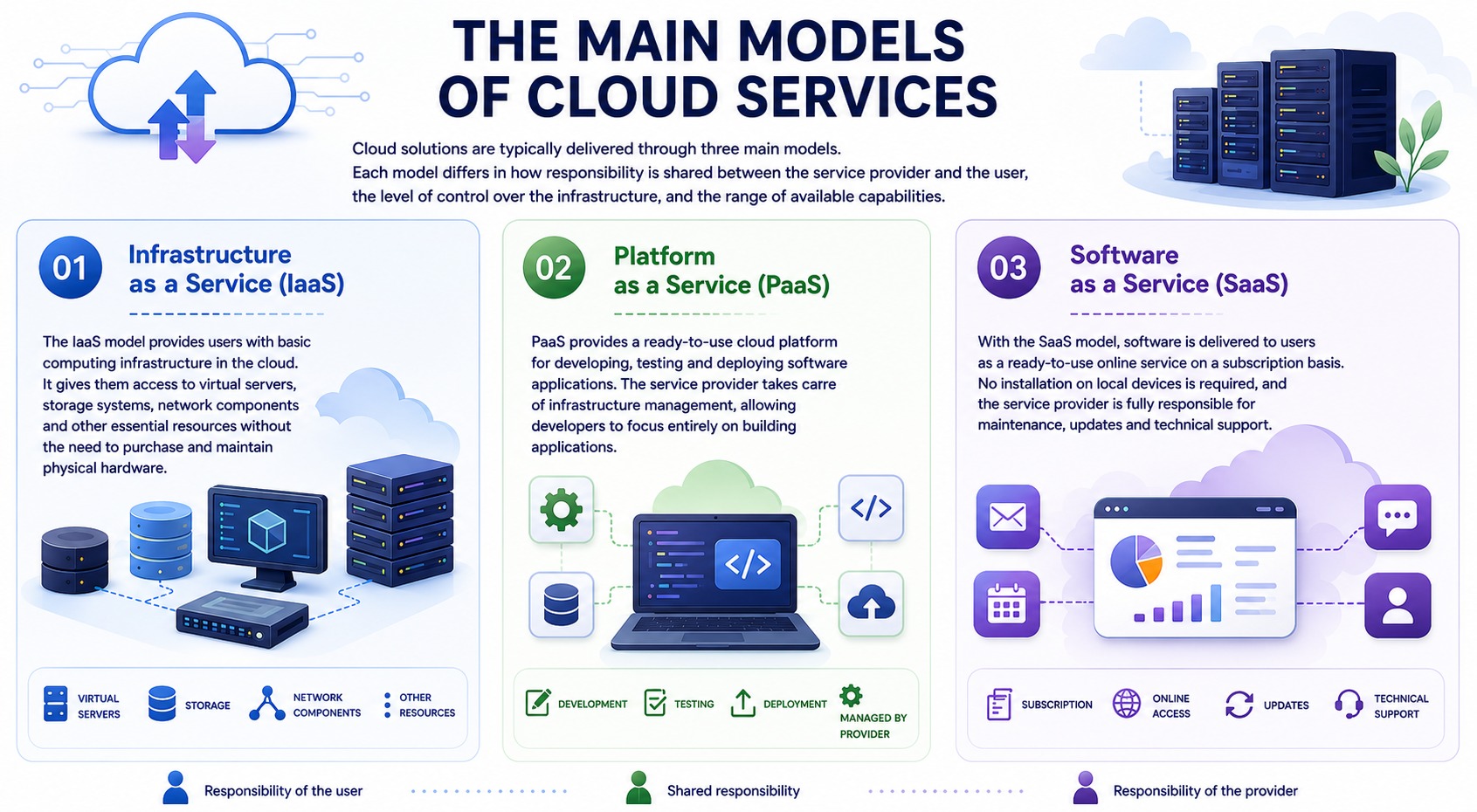
- Infrastructure as a service (IaaS). With IaaS, you rent the basic building blocks — virtual servers, storage, and networking — instead of buying physical hardware. You get what you need, when you need it.
- Platform as a service (PaaS). PaaS gives developers a ready-to-go environment for building, testing, and launching apps. The provider handles all the infrastructure, so developers can focus on what they do best — writing code.
- Software as a service (SaaS). SaaS delivers software straight to your browser as a subscription service. No installs, no updates to worry about — the provider handles everything, including security and support.
You can mix and match these models to build an IT setup that works best for your business.
How does cloud computing work?
At its heart, cloud computing moves your digital operations off of local hard drives and onto a massive, interconnected network of remote servers. These servers work together in secure data centers worldwide to store your data, run your applications, and handle user requests smoothly. Here is a closer look at the key mechanisms that make this possible:
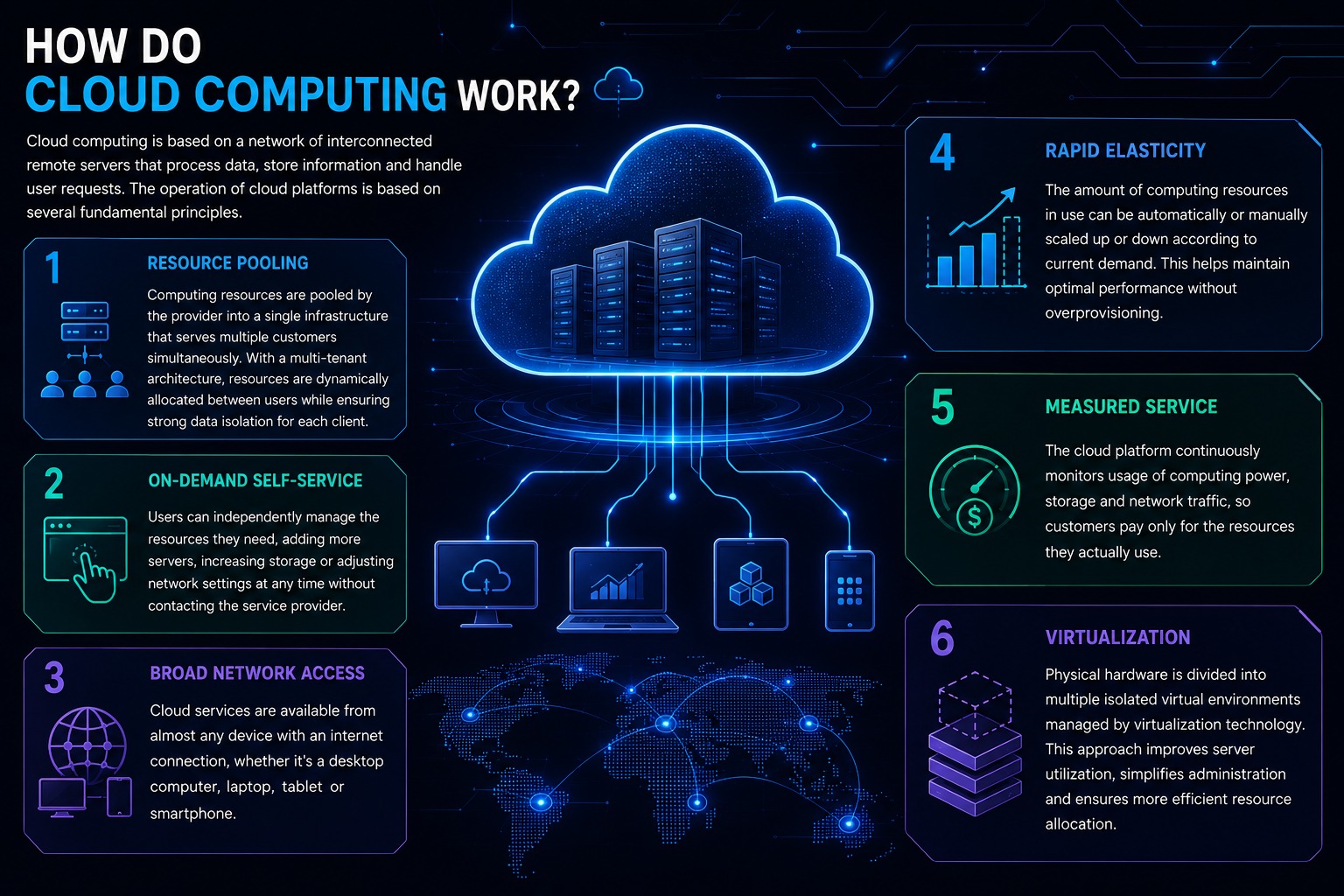
- Resource pooling. Cloud providers pool their physical computing resources — such as processing power, memory, and storage — to serve multiple customers simultaneously. Using a secure multi-tenant model, these resources are dynamically assigned and reassigned based on real-time demand, all while utilizing advanced security protocols to keep everyone’s private data completely separate and isolated.
- On-demand self-service. If you need to spin up an extra virtual server for testing or provision more storage for a new project, you don’t have to wait. You can set up and configure these services yourself in just a few clicks through an online dashboard, without needing to contact the provider’s support team or wait for manual intervention.
- Broad network access. Cloud services are designed to be highly accessible from almost anywhere in the world. Whether you are working on a laptop at home, checking updates on your phone or tablet on the go, or using a desktop in the office, you can securely access your applications and files as long as you have an active internet connection.
- Rapid elasticity. The cloud can automatically scale resources up or down in real time to match your current workload. If your business experiences a sudden, temporary spike in traffic, the system automatically expands to handle the load to prevent downtime, and then scales back down when things quiet down so you aren’t left paying for idle capacity.

Cloud solutions - Measured service. Much like a utility bill for water or electricity, cloud computing operates on a pay-as-you-go model. The platform automatically monitors and measures your precise resource usage — including processing power, storage volume, and bandwidth — so you are only billed for the exact number of resources you actually consume.
- This is the foundational technology that makes cloud computing highly efficient. Virtualization software divides a single physical server into multiple isolated virtual environments, allowing organizations to run different operating systems and applications on the very same hardware without any interference.
Put all of these elements together, and you have a highly reliable, flexible system that is built to scale alongside your business and keep up with whatever operational challenges you face.